
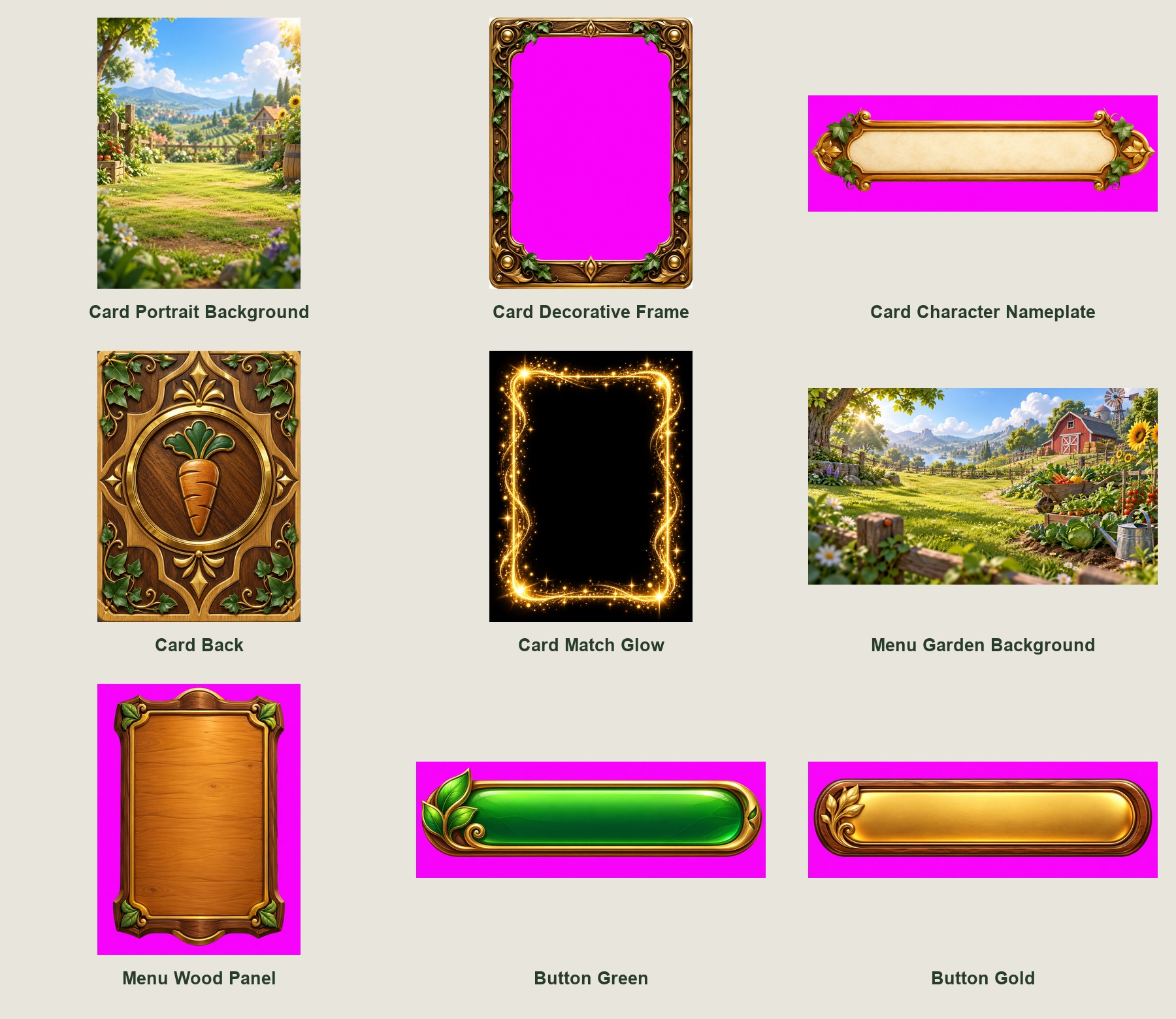
Why we built this part
Ten official character cards and a shared back. This work has to fit the rest of the game, not exist as an isolated feature. We considered how a player arrives at this screen or action, what information it needs from the previous system, and what must be handed off to the next stage.
Preparing the scene and assets
For this milestone, the relevant project source is Scripts/Gameplay/MemoryMatchCanvasGame.cs. The components and resources involved include 01_Crazy_Carrot through 10_Pumpkin_Pete; Back.png. We keep art, controller logic and UI objects organized so future changes do not require rebuilding unrelated systems. In the Unity Editor, identify the scene object that will own this feature, confirm its references and decide how it should be activated and deactivated.
Building it step by step
Place named images under Resources/HQ/Cards and use Resources.Load<Texture2D> at startup. Keep naming stable between files and the card-ID list.
After placing the necessary objects, connect their references in the Inspector or, where the project creates objects at runtime, in the construction method. Confirm that UI labels display data from the gameplay controller rather than storing a second version of the same information. Give each interactive control a specific action and handle unavailable actions visibly.
Connecting it to the rest of the game
The feature should receive the correct state when a session begins and release or reset transient objects when the player returns to a menu or starts over. Where a sequence spans several frames, use a coroutine or well-defined state transition rather than relying on a single click to finish everything immediately. This is particularly important in Unity WebGL, where focus and window dimensions can change during play.
The design decisions behind it
01_Crazy_Carrot through 10_Pumpkin_Pete; Back.png influenced the appearance and behavior of this stage. We preserve clear contrast, useful spacing and recognizable feedback because players need to understand the action before decorative polish can help. If an asset is a historical review image, it remains labeled as development material rather than a final screenshot.