What we are creating
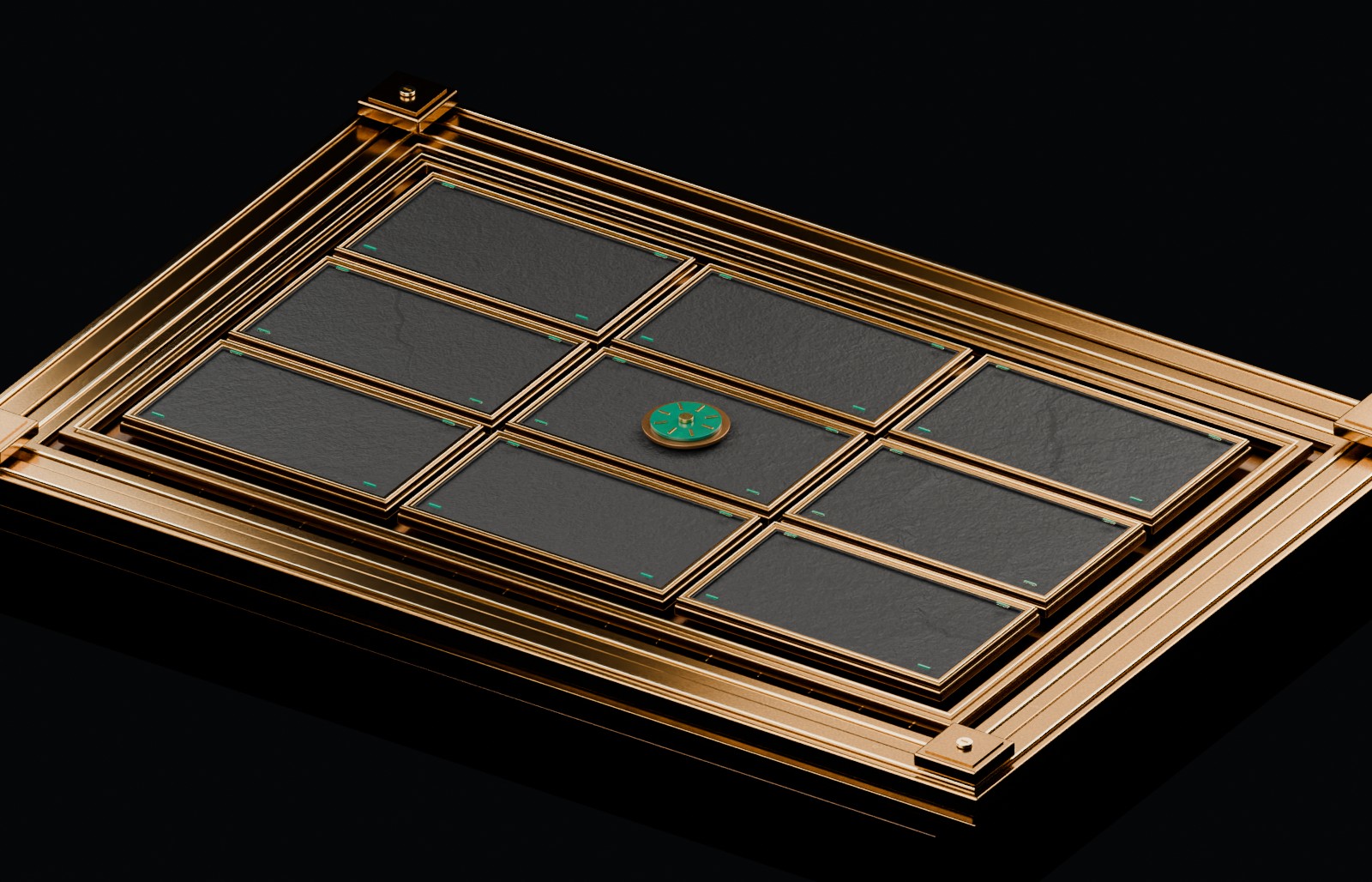
Atlas Card Game is our working title for a digital tabletop card-game project. Our aim is to combine a welcoming, physical-board feel with the depth and flexibility that a digital game can offer. The board itself is an important part of the experience: rather than relying on a flat menu, we want players to feel that they are sitting down at a crafted game table.
We are planning for cards, meaningful strategic choices, and a system we can grow over time. Individual rules and content are still in development, so this journal focuses on the direction of the project rather than promising a finished feature list.
Our engine and visual direction
We are building in Unity 6 (6000.3.22f1) using the High Definition Render Pipeline (HDRP). HDRP gives us a strong foundation for the wood, metal, enamel, reflections, and lighting we want across the tabletop. Our visual target is rich and tactile: dark finished wood, carefully polished brass, contrasting accents, and a board that remains readable in play.
Blender, Substance Painter, and Unity
Blender is where we create and refine the 3D models, from the table and board details to decorative pieces. We use Adobe Substance 3D Painter to develop the surface finishes that make each object feel like a real material: grain and varnish on wood, subtle variation on bronze and brass, and distinct finishes for other parts of the board.
Those assets come together in Unity, where we set up the HDRP materials, game camera, environment, lighting, interaction, and eventually the gameplay itself. Moving between these applications is an iterative process: we compare the result at each stage and adjust the art whenever the in-engine view drifts from the intended look.
What comes next
Our immediate focus is a cohesive playable presentation: a board that looks as good in Unity as it does in our art tools, without losing contrast or washing out the materials. From there, we can expand the card presentation and the mechanics surrounding the tabletop. Chapter 2 shows the visual journey so far.